① Over the past few days, the United States and Iran have shown divergence in their positions on key issues including verification authority, the use of frozen funds, and control over the Strait of Hormuz.
② This has intensified market doubts about the prospects for US-Iran negotiations and cast a shadow over the roadmap that originally aimed to reach a final agreement within 60 days.
Vance also stated that the relevant parties have reached an arrangement on a funding mechanism. If Iran’s frozen assets are unfrozen in the future and enter the relevant process, the United States and Qatar will jointly approve their use. The funds will be used to purchase U.S. soybeans, corn, and wheat, and will ultimately serve the Iranian people.
Iran Repeatedly Denies Regarding nuclear inspections and the unfreezing of funds, Iran’s statements differ markedly from those of the United States. Iranian Foreign Ministry spokesman Baghaei said earlier on the 23rd that there is currently no plan for International Atomic Energy Agency inspectors to visit Iran’s damaged nuclear facilities. Baghaei also said that Iran will make the best decision on the use of unfrozen assets in accordance with national interests and will use them freely according to its own needs, “without any restrictions.” On the 22nd, Baghaei said that Iran’s cooperation and interaction with the IAEA will continue under the existing mechanism and in accordance with relevant Iranian parliamentary laws and decisions made by the Supreme National Security Council. Regarding the use of unfrozen funds, according to Iranian sources on the 23rd, Central Bank of Iran Governor Hemmati said that Iran is not obligated to use unfrozen funds to purchase agricultural products from the United States. In an interview, Hemmati responded to U.S. President Trump’s statement that Iran’s unfrozen funds should be used entirely to purchase U.S. agricultural products, saying: “According to the signed memorandum of understanding, we are not obligated to purchase agricultural products from the United States.” Hemmati said the use of the “first tranche of 6 billion U.S. dollars” will basically follow the agreement reached between Iran and the United States in 2023, with purposes including the purchase of basic goods and medicine. Hemmati also said that if the price and quality of U.S. products are more suitable than those of other countries, Iran does not rule out purchasing from the United States. On local time the 22nd, Iranian sources quoted a source close to the Iran-U.S. negotiations as saying that the claim that “Iran’s frozen funds will be used to purchase food” is not true and that no such statement appears in any agreement. The source said the main reason the U.S. side raised such claims is considerations related to U.S. domestic politics. Dispute Over Control of the Strait of Hormuz In addition, regarding control of the Strait of Hormuz, the statements of both the United States and Iran are also sharply opposed. Although U.S. President Trump claimed that the United States allows the Strait of Hormuz to remain open, Iran has repeatedly emphasized its management authority over this key strait. Iran’s Permanent Representative to the United Nations Office at Geneva, Ali Bahreini, said on the 23rd that the Strait of Hormuz is fully open to commercial vessels and no fees are charged.Bahraini, responding to a question from the United Nations Geneva Correspondents Association on the same day regarding the status of Iran-US negotiations, stated that the Strait of Hormuz is now open for a period of 60 days, during which no fees will be charged.
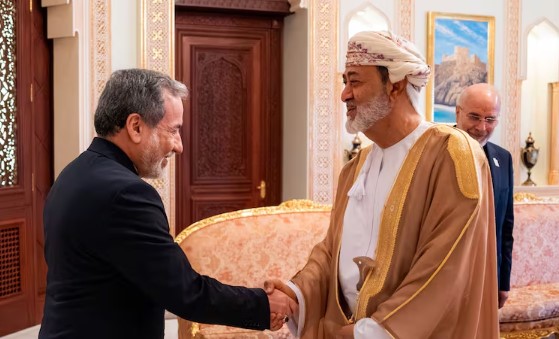
In addition, both Iran and the United States decided to establish a communication mechanism on this issue to monitor and resolve any problems that may arise. After 60 days, the specific arrangements for the Strait’s opening will be determined by the outcome of negotiations between Iran and the United States. Iranian Parliament Speaker Ghalibaf also stated on the 23rd that the Strait of Hormuz will be managed by Iran in accordance with international law and its own arrangements, and that Iran will establish a coordination center and hotline to address related issues. Furthermore, Oman and Iran issued a joint statement on the 23rd, agreeing to maintain dialogue through a joint working group between their foreign ministries in order to reach a consensus on the future navigation management of the Strait of Hormuz, services provided, and related fees.